We Are a Walking City
From bacteria to plants and animals to humans, every living thing is made up of cells. In the human body, different cells give rise to various organs, such as the heart, lungs, liver, etc. that, in turn, make a functional human body. This is analogous to how different components, such as hospitals, supermarkets, schools, and houses, comprise one functional city. To battle with any criminal activity, there is police in every city. Similarly, our body has its own version of the police, called the immune system. The immune cells are the policemen, and the immune system is the police department. Viruses, bacteria, parasites, or any other pathogens are burglars inside our bodies that are dealt with by our immune system.
HIV – An Intruder
HIV stands for Human Immunodeficiency Virus and thus belongs to the virus family of pathogens. Different types of viruses harm different cells in our body. HIV is particularly dangerous because it hurts and kills the immune cells. Since the number of immune cells is decreasing, HIV infection leaves the rest of the body vulnerable to other pathogens.
Normal Function of The Police
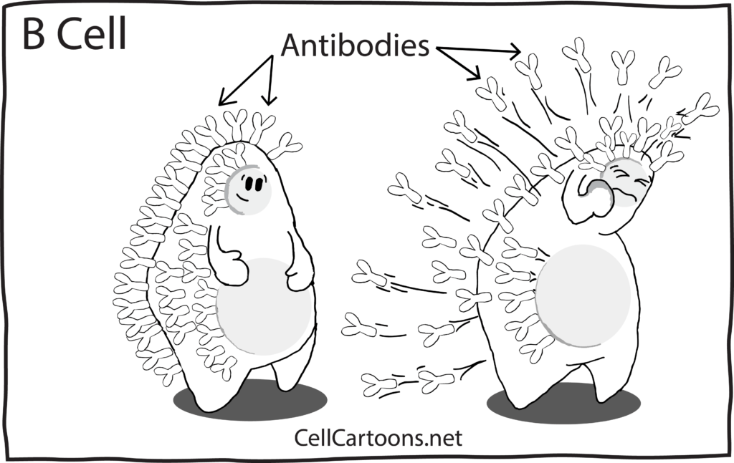
Analogous to different forces within the police department, our immune system also contains specialized cells. One of those specialized cells is CD4+ T-cells, also called Helper T-cells (TH cells). The TH cells play a critical role when it comes to mounting a potent immune response. Similar to how a dispatcher notifies the police of any criminal activity, another type of immune cell, called MHC class II, presents the TH cell with the information of an invading pathogen. This allows the TH cell to be activated. When activated, TH cell helps – as its name implies – to activate another specialized immune cell type called B-cells. Activated B-cells multiply themselves and produce and secrete antibodies, analogous to bullets, that either inactivate or kills the pathogen and the infected cells. Threat neutralized. *blows smoke off gun*
CD8+ T-cells (Cytotoxic T-cells) and Natural Killer cells are another type of immune cells that kill infected cells. TH cells also help to activate these cells during an infection. Moreover, TH cells also influence the activity of monocytes and macrophages. Both of these cell types kill pathogens by literally engulfing/eating them. Therefore, the critical role of TH cells in an effective immune response is apparent.

HIV’s Deadly Love for CD4+ T-cells (TH cells)
Viruses infect the human body for one purpose: to increase themselves in number, and HIV is no exception. Each cell contains a “mini-functional city” within it, which allows it to carry out its appropriate function. When viruses infect cells, they hijack the cell’s machinery to make more of themselves. The end result is cell death in different ways.
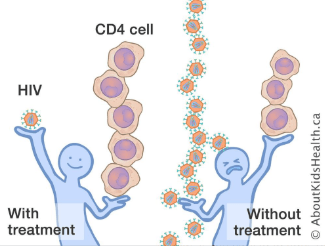
HIV infects and kills TH cells in multiple ways. It can increase itself in so much quantity that it causes the cell to burst, just like a balloon popping due to excess water. Two other ways are either exhausting the cellular machinery to death or distorting it to such an extent that programmed cell death – apoptosis – is triggered, which is analogous to euthanasia. Considering the pivotal role of TH cells in an effective immune response, their death has devastating consequences on the human body. Over time, the number of TH cells falls so low that Acquired Immune Deficiency Syndrome (AIDS) is triggered. In AIDS, even mild/opportunistic infections that would otherwise be harmless can kill the infected person if not treated.
How Do We Get HIV?
HIV is mainly contracted via contact with either vaginal fluid, semen, or blood of an infected person. Some conventional methods of transmission are:
- Sexual contact with an HIV infected person
- Sharing drug needles with an HIV infected person
- An infected mother transmitting HIV to her child via breast milk, during birth, or pregnancy
Symptoms of HIV
Depending on the stage of the disease, people may get variable symptoms or even none. HIV progresses through three different stages:
Stage 1: Acute HIV Infection
Within a few weeks of the infection, most people will exhibit flu-like symptoms, such as fever, sore throat, muscle aches, fatigue, etc. This is how our body naturally responds to HIV infection. Most people do not exhibit any symptoms during the initial stage of the infection. For the people who do, the symptoms can last from a few days to several weeks.
Stage 2: Clinical Latency
In this stage, HIV does multiply but in very low quantity. Therefore, people may be symptomless and may not feel sick. This stage can last for 10-15 years or less depending on factors such as whether patients seek treatment or not, and the type of environment they live in.
Stage 3: Acquired Immune Deficiency Syndrome (AIDS)
If the infected person decides not to get treated for HIV, their immune system will be severely weakened, thereby triggering AIDS. Symptoms include but not limited to:
- Pneumonia
- Extreme fatigue
- Genitals, anus, or mouth appear sore
- Rapid weight loss
These symptoms may be manifestations of other illnesses. Therefore, to fully ensure that these symptoms are due to HIV, a test is required.
HIV Treatment
Even though HIV infection is incurable, the world does not end for infected individuals. With appropriate and timely treatment, infected individuals can have clinically undetectable virus levels and live a long, happy, and healthy life. The most effective HIV treatment is Antiretroviral therapy (ART). This medication involves a pill made out of several different drug classes. A patient can start this therapy at any stage of the infection.
How to prevent HIV?
To prevent HIV, one should:
- Refrain from risky sexual behavior
- Use condoms
- Limit the number of their sexual partners
- Refrain from injecting drugs
- Seek pre-exposure prophylaxis (PrEP) treatment
Conclusion
HIV is indeed a daunting disease. However, with appropriate caution, one can protect themselves from it. For HIV infected individuals, the current treatments show promising results. So, do not worry, science is here to rescue you.
References
- Redfield, R. R., & Burke, D. S. (1988). HIV Infection: The Clinical Picture. Scientific American, 259(4), 90–98. doi: 10.1038/scientificamerican1088-90
- HIV (Human Immunodeficiency Virus) Infection. (n.d.). Retrieved from https://www.healthlinkbc.ca/health-topics/hw151408
- Paddock, C. (2013, June 6). How HIV Makes Immune Cells Commit Suicide. Retrieved from https://www.medicalnewstoday.com/articles/261597#1
- Content Source: HIV.govDate last updated: June 21, 2019. (2019, September 25). Symptoms of HIV. Retrieved from https://www.hiv.gov/hiv-basics/overview/about-hiv-and-aids/symptoms-of-hiv
- The Basics of HIV Prevention Understanding HIV/AIDS. (2019, April 29). Retrieved from https://aidsinfo.nih.gov/understanding-hiv-aids/fact-sheets/20/48/the-basics-of-hiv-prevention
- HIV/AIDS. (2020, February 13). Retrieved from https://www.mayoclinic.org/diseases-conditions/hiv-aids/diagnosis-treatment/drc-20373531
 Biology For Lay Audience